Copper sinks, hoods and fixtures: why the wrong cloth costs thousands
Living finishes are meant to change, but not from a fingerprint under a sticker or a scouring pad. How we handle copper, brass, bronze and zinc on a final clean.
 Valerie Hixon · Owner, Kleen Sweep · · 5 min read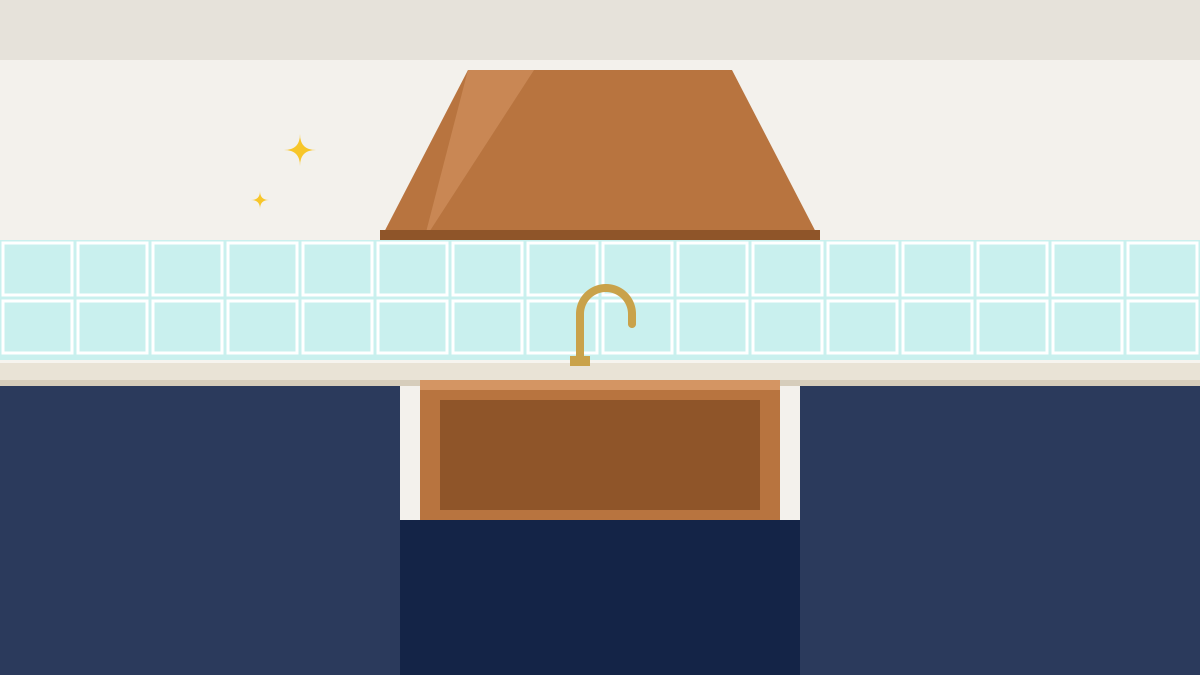
A custom copper range hood in a Bitterroot Valley kitchen can cost more than a used truck. A copper farmhouse sink is not far behind. Both arrive on the jobsite with a protective film, a sticker, and a finish that will remember every mistake anyone makes with it for the rest of its life.
Living finishes
Copper, brass, bronze and zinc are usually installed as “living” finishes. That means they are not lacquered. They are meant to darken and develop a patina over years of use, and the homeowner chose them for exactly that reason. The patina is uneven by nature, and that is the look.
What the homeowner did not choose is a bright fingerprint-shaped spot where a trade grabbed the hood with a greasy hand, a dull rectangle where a sticker sat for six weeks, or a scratch pattern from a green scrub pad. Those are not patina. Those are damage, and on a living finish they can take a year to blend in, if they ever do.
What goes wrong on jobsites
- Stickers and film left too long. The adhesive reacts with the metal. When the sticker finally comes off, there is a clean rectangle in a field of early patina.
- Abrasive pads. Anyone who has cleaned a stainless sink reaches for a scrub pad. On copper that leaves permanent scratches.
- Acidic cleaners. Vinegar, lemon and most “copper cleaners” strip the patina back to bright metal in a blotchy pattern. On a lacquered fixture they can cloud the lacquer.
- Water spots. Hard water left to dry on a copper sink leaves mineral rings that etch in.
- Bare hands. Skin oil leaves prints that show up as darker spots a month later.
How we clean copper and brass
Gloves on. Nitrile gloves for anything we touch.
Film and stickers off first, carefully. We lift a corner and pull slowly at a low angle. Any adhesive left behind comes off with warm water and a soft cloth, then a mild dish soap solution. No solvents unless the fabricator’s care sheet allows them.
Warm water and mild soap, nothing else. A soft microfiber, a gentle wipe in the direction of the grain if there is one, then rinse with distilled water and dry immediately. Drying is the step people skip, and it is the one that prevents spots.
Nothing that polishes. We are not there to make it shiny. If the homeowner wants a bright finish, that is their decision and their polish, after they move in.
Lacquered fixtures get the same treatment with even less water. Lacquer clouds if water sits on it.
Zinc counters and bar tops are the most reactive of all. Water, soap, dry, and we flag anything that looks like a chemical mark so the fabricator can advise.
What we leave on the counter
A short card: warm water, mild soap, soft cloth, dry it after use, and let it age. We also tell homeowners that the first few months will look uneven and that this is normal. More than one new owner has tried to “fix” an early patina with a polish and made it worse.
Why this matters to the builder
A damaged copper hood is a change-order conversation nobody wants. Most of the damage we see happened before we arrived, which is why copper and brass fixtures are first on our walk-through and first on the flag sheet. If there is a scratch or a stripped patch, the builder knows before the owner does, with a date on it.