Blue tape and a marker: how we flag what the contractor needs to see
A final clean is the last close look a building gets before the owner walks it. Here is the flag system we have used for twenty years, and why builders ask for it.
 Valerie Hixon · Owner, Kleen Sweep · · 7 min read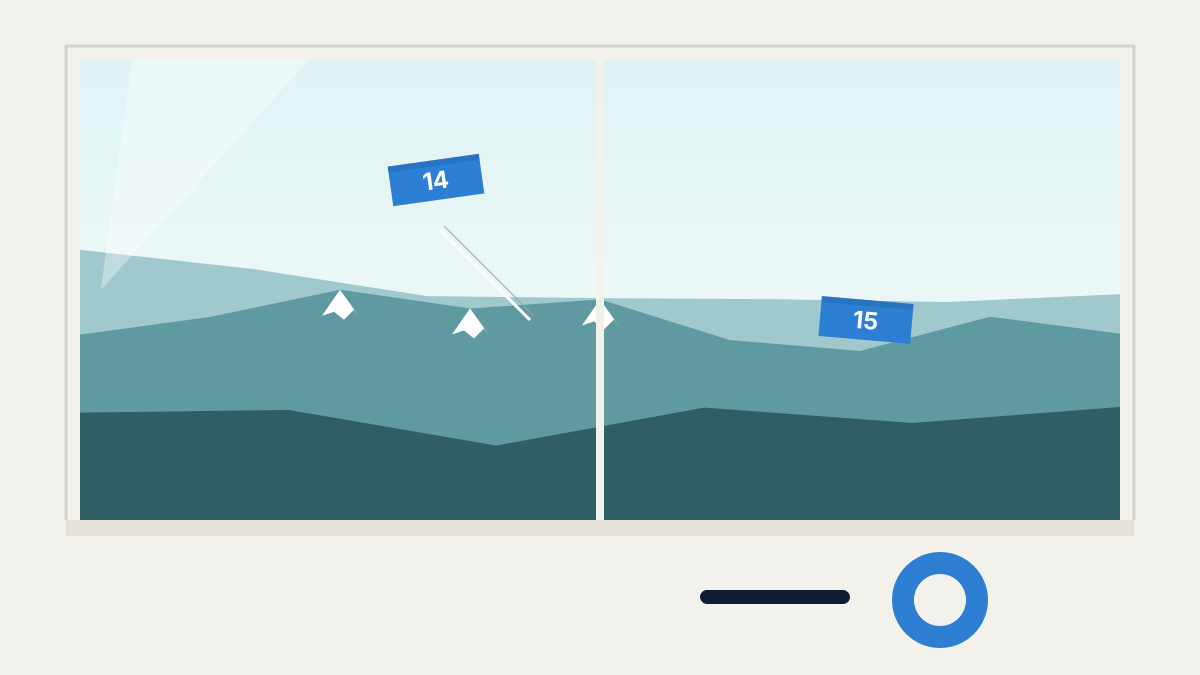
By the time we walk into a house for the final clean, forty or fifty people have worked in it. Every one of them left something behind: a chipped corner on a piece of trim, a hinge with paint on it, a window with a scratch hiding under the manufacturer’s sticker. Most of it is small. All of it is what a homeowner notices on walkthrough day, because by then it is the only thing left to notice.
So we flag it. It is the simplest part of what we do and the thing builders mention most when they call us back.
What a flag is
A piece of blue painter’s tape, a number written on it in marker, and a line on a sheet that stays on the kitchen counter. The tape goes as close to the issue as it can without touching a finish it could mark. The sheet says the room, the number, what we saw and whose trade it probably belongs to.
Example line from a flag sheet 14 · Primary bath · Scratch on lower-left pane of west window, under label · Glazier / window supplier
That is the whole system. We have tried stickers, colored dots and two different apps. Blue tape and a marker still win because every trade on the site already knows what they mean, nobody has to download anything, and the tape comes off clean.
Where the tape goes, and where it never goes
Tape placement matters more than people think. Painter’s tape is designed to release from cured paint, but it will still lift a fresh coat, pull the finish off oiled wood, and leave a shadow on unlacquered brass. So we have rules:
- On glass, the tape goes on the glass, never on the frame.
- On painted walls, the tape goes on the nearest piece of trim or the floor, with an arrow.
- On stone, wood, plaster and metal finishes, the tape never touches the surface. It goes on the floor below with the number and a note.
- On cabinetry, it goes on the inside of the door, not the face.
A flag that damages what it is pointing at is worse than no flag.
What we flag and what we don’t
We flag anything we cannot fix with cleaning and that an owner would reasonably see. That list is longer than people expect:
- Scratched or chipped glass, especially under labels where it only shows after the sticker comes off
- Missed paint touch-ups, drips, and overspray on hardware that will not come off without damaging the finish
- Grout haze or mortar smears that have cured too long for a cleaner to remove safely
- Cabinet doors out of alignment, drawers that catch, loose pulls
- Caulk gaps at counters, tubs and trim
- Nail pops, dings in drywall, trim corners that did not meet
- Anything on a specialty finish, like an etched spot on limestone or a water mark on oiled wood, that a trade needs to see before the owner does
We do not flag our own work. If something is dirty, we clean it. The sheet is only for things that need a trade, not a rag.
Why builders want this
The builder’s walkthrough is a sales moment. A homeowner who finds three problems in the first ten minutes keeps looking for a fourth. A builder who hands over a flag sheet and says “we found these and they are scheduled for Tuesday” is in a completely different conversation.
It also saves trips. The painter comes back once with a numbered list instead of twice with a vague one. The glazier can order the replacement pane before anyone has to meet on site.
And it protects the builder. When something turns up after closing, the flag sheet is a dated record of what was and was not there at final clean.
How to use the sheet
- Walk the house with the sheet before the owner does.
- Assign each number to a trade and schedule it.
- Pull the tape as each item is fixed. Leave the sheet until it is empty.
- Call us for the touch-up clean once the trades are out. They will leave footprints; it is what trades do.
Twenty years of the same tape
A superintendent in Hamilton once told us the flag sheet was the first thing he looked for when he walked into a house we had cleaned. Not the floors, not the windows. The sheet. Because the sheet told him how much work he had left before closing, and the floors and windows he already trusted.
Some things in this business do not need improving.