Oiled wood, limewash and plaster: the finishes you clean dry first
Water is the wrong first tool for some of the most expensive finishes in a custom home. How we read a finish schedule and clean in the right order.
 Valerie Hixon · Owner, Kleen Sweep · · 5 min read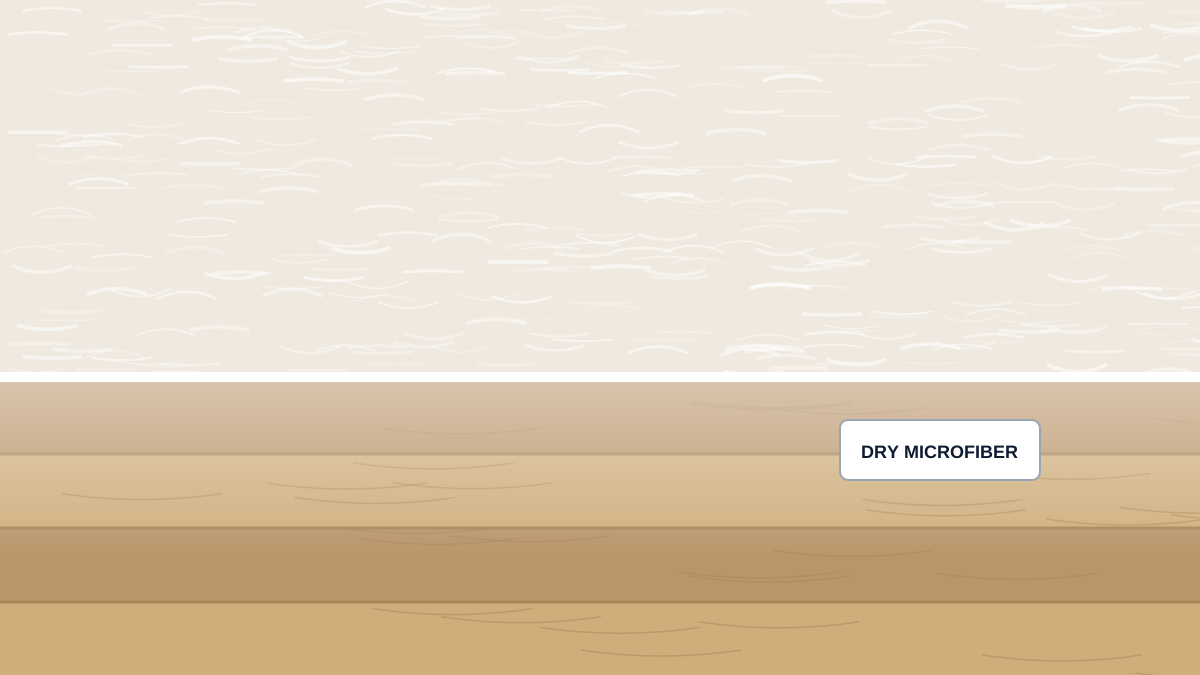
The finishes that make a Bitterroot Valley custom home feel like a custom home are increasingly the ones that hate water: hardwax-oiled floors, limewashed walls, Venetian and clay plaster, waxed steel, raw brass. They arrive at final clean covered in the same dust as everything else, and the instinct to grab a damp cloth is exactly wrong.
Hardwax oil and penetrating oil floors
A lot of the wide-plank white oak going into new homes is finished with a hardwax oil rather than polyurethane. It looks and feels like wood, not plastic, and it is repairable. It is also a finish that lives in the top layer of the wood, not on it, which means:
- Water sitting on it leaves a mark.
- Standard floor cleaners strip the oil and leave a dull patch.
- Drywall dust ground in by foot traffic acts like fine sandpaper.
How we clean it: HEPA vacuum with a soft brush head, then a dry microfiber flat mop, repeated until the mop comes up clean. Only then a barely damp mop with the specific soap the oil manufacturer makes for that finish. Never a wet mop, never a general cleaner, never a steam mop. Scuffs and small scratches are flagged rather than scrubbed; most oil finishes can be spot-repaired by the flooring contractor.
We also check the finish schedule before we touch the floor. The finish is usually listed by brand, and that tells us which soap to bring.
Limewash
Limewash is a mineral paint. It is matte, slightly chalky and beautiful, and it has no film. Wiping it with a damp cloth moves pigment and leaves a streak or a shiny burnish mark that cannot be undone without repainting the wall.
How we clean it: Dust only. A soft dry microfiber or a vacuum with a soft brush, from the top down. Fingerprints and scuffs are flagged for the painter. Overspray from other trades on a limewashed wall is almost never recoverable and goes on the flag sheet the day we see it.
Plaster
Venetian plaster, tadelakt and clay plasters each have their own rules. Venetian plaster is usually burnished and sometimes waxed; it tolerates a dry wipe and a very lightly damp cloth with no cleaner. Tadelakt is soaped and sealed; it tolerates water but not acids or abrasives. Clay plaster is the most fragile: dust only, and even a dry cloth pressed too hard will mark it.
How we clean it: We ask the plaster contractor. Every plaster job we have cleaned has had a different answer, and the contractor who applied it knows. When we cannot reach them, we dust and flag.
Waxed steel, blackened steel and raw brass
Fireplace surrounds, range hoods, railings and cabinet pulls in these finishes are protected by a wax or a thin oil, not a lacquer. Water spots them, and most cleaners strip the wax.
How we clean it: Dry microfiber, gloves on. Any residue that needs more than that is flagged, with the fabricator’s name if we have it.
Reading the finish schedule
The single most useful document on a custom home job is the finish schedule from the designer or builder. It tells us what every surface is before we touch it. We ask for it with the quote request and we walk the house with it. When there is no schedule, we assume every unfamiliar surface is the fragile kind until someone tells us otherwise.
The order of operations
- Identify every finish that hates water. Mark it on the walk-through.
- Dry clean those surfaces first, before any wet cleaning starts in the room, so splash and humidity do not reach them.
- Wet clean the durable surfaces: tile, glass, sealed counters, painted trim.
- Return to the fragile surfaces for a last dry dust once the room is finished.
It takes a little longer. It is a great deal cheaper than replacing a limewashed wall.